Truck lashing straps have many different names. They are commonly referred to as ratchet lashing straps, tie-down straps, bundling straps, or cargo lashing straps. These straps are crucial for the safety of goods during transportation. Each lashing strap boasts strong tensile strength and reliable performance.
Key Takeaways
- Truck lashing straps, also known as ratchet lashing straps, tie-down straps, or bundling straps, are essential for ensuring the safety of goods during transportation. When choosing the right lashing straps, the weight of the goods and the mode of transport should be considered. This ensures safety and prevents accidents. Ratchet lashing straps have strong tensile strength and are best suited for securing heavy objects. Bundling straps are suitable for more fragile items. Ladders should be regularly inspected for damage. Ensure they meet safety specifications to perform at their best. Using clear and easy-to-understand terminology to describe truck lashing straps helps buyers find the products they need and facilitates discussion.
Main Names for Lorry Straps
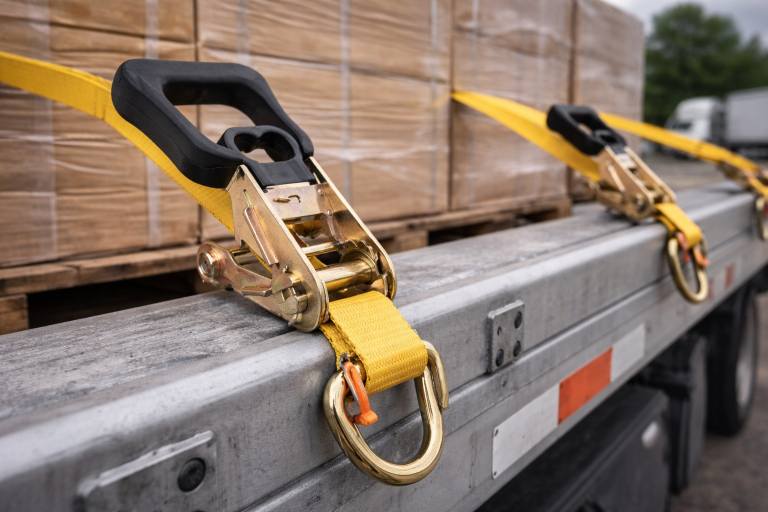
Ratchet Straps
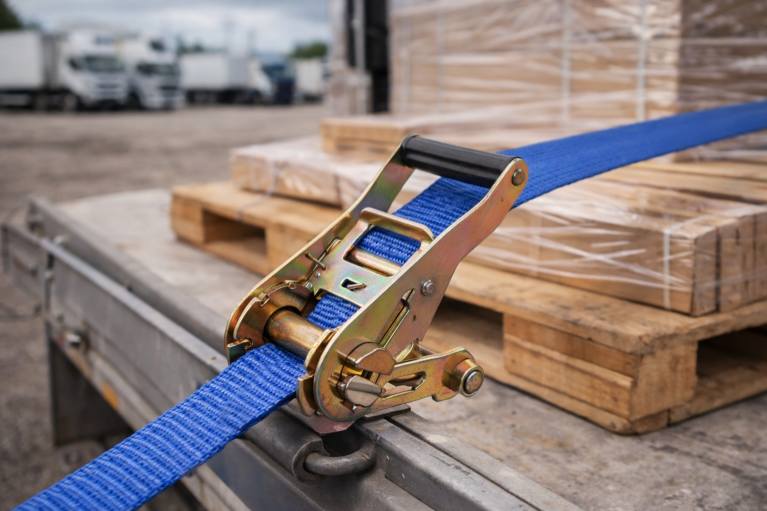
Ratcheted ties are the most common method of securing heavy cargo. They utilize a ratchet mechanism to tighten the load with strong pull. Drivers typically use ratchet ties for long-haul transport and when transporting heavy equipment. The ratchet mechanism allows you to precisely adjust the tightness of the ties as needed, keeping the cargo stable even on bumpy roads.
The following table lists the main types of ties commonly used in trucking:
| Strap Type | Usage Description | Tensioning Mechanism | Load Capacity | Security Level |
|---|---|---|---|---|
| Ratchet Straps | Best for heavy equipment and long trips. | Ratchet mechanism | High | Very secure |
| Lashing Straps | Good for lighter loads and short trips. Protects fragile items. | Cam buckle | Low-Moderate | May loosen over time |
Ratchet straps come in various sizes and strengths. For example, 2-inch ratchet straps can secure motorcycles or all-terrain vehicles, while 4-inch ratchet straps are used to secure the heaviest cargo on flatbed trucks. The table below lists common uses and load limits for ratchet straps:
| Strap Type | Typical Applications | Load Limits (lbs) |
|---|---|---|
| 1 inch Ratchet | Moving vans, dry vans, pickup truck beds, trailers | 500 to 1,100 |
| 2 inch Ratchet | Securing vehicles, motorcycles, ATVs, truck cargo | 915 to 3,335 |
| 3 inch Ratchet | Flatbeds, heavy-duty jobs | 5,000 to 5,670 |
| 4 inch Ratchet | Heaviest cargo for flatbed trucks | 5,400 to 5,670 |
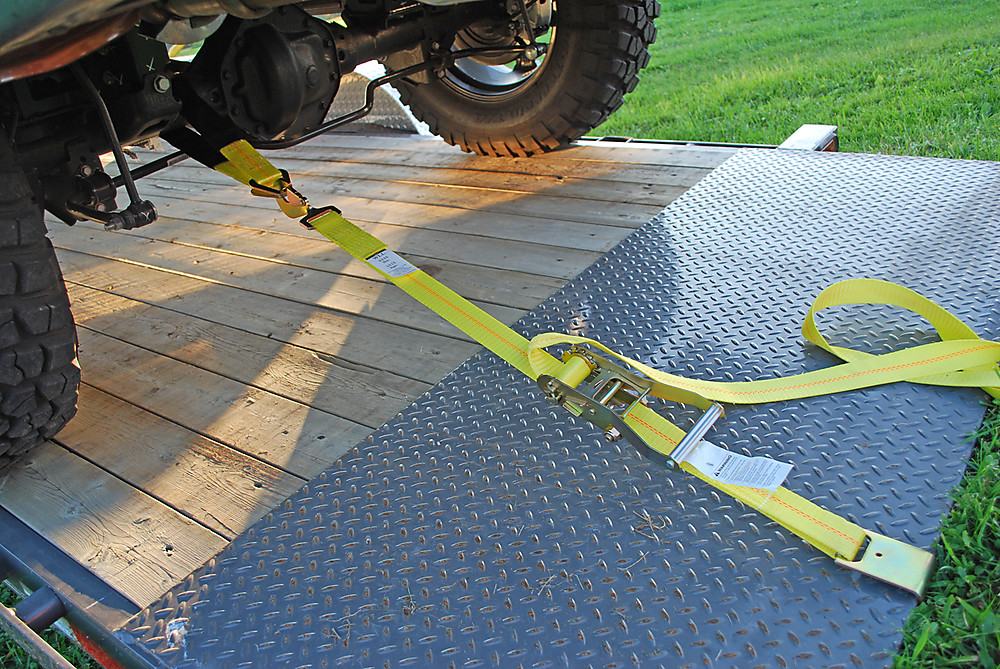
Ratchet straps utilize various end fittings, such as wire hooks, flat hooks, spring hooks, and chain extensions. Each fitting helps secure the strap to an anchor point or E-track system. The ratchet provides strong tension and keeps the strap taut during movement.
Tie-Down Straps
Strap straps are a general term for various types of straps used to secure goods on trucks, vans, and trailers. These straps include ratchet straps, cam-buckle straps, and center-buckle straps. Most straps are made of strong polyester webbing. This material is abrasion-resistant, sun-resistant, mildew-resistant, and chemically resistant. Polyester fibers have low elongation, thus ensuring the safety of goods.
All straps must be marked with their working load limit. This indicates the maximum safe load the strap can withstand. Regulations state that damaged straps must be taken out of service immediately. The Federal Motor Transportation Safety Administration (FMCSA) has established cargo securing rules. These rules ensure that lashing straps can withstand the forces generated by acceleration, stopping, and turning.
Lashing Straps
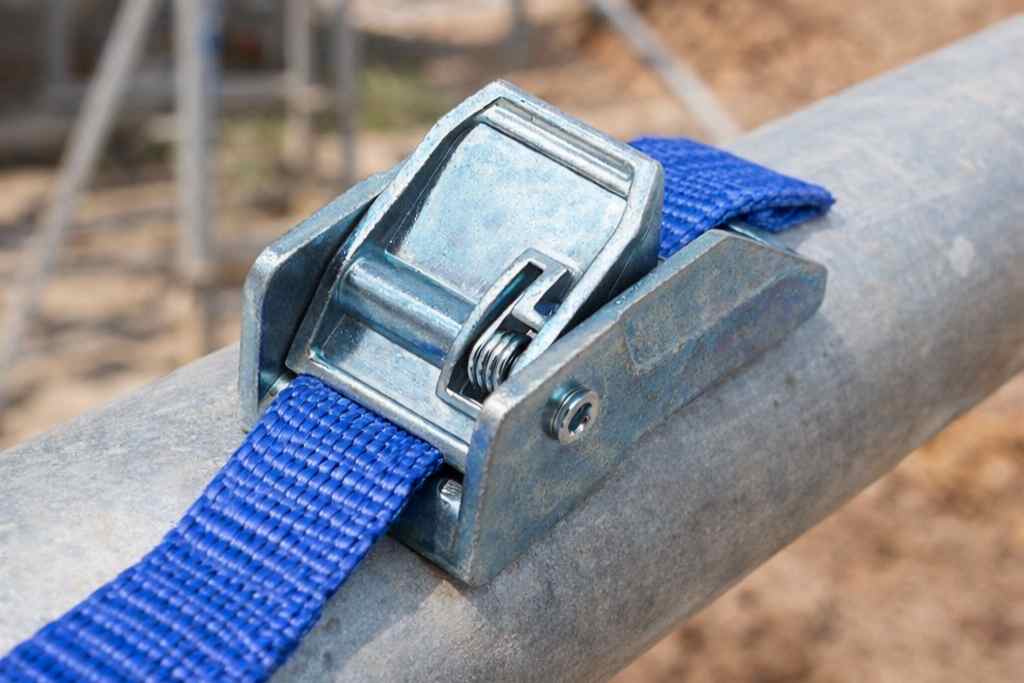
Laceing straps are best suited for light cargo and short-haul transportation. These straps use cam buckles instead of ratchet buckles. Cam buckles tighten quickly and easily, but their tensile strength is not as strong as ratchet buckles. Laceing straps protect fragile items from damage during transportation.
Laceing straps differ from ratchet straps in the following ways:
| Feature | Ratchet Straps | Lashing Straps |
|---|---|---|
| Securing Mechanism | Mechanical ratchet mechanism | Simple cam buckle |
| Tensioning Force | High tensioning force | Low-Moderate tensioning force |
| Load Capacity | High load capacity | Low-Moderate load capacity |
| Security Level | Very secure, handles vibration | May loosen over time with vibration |
Ladder straps may loosen when a vehicle is bumpy or traveling on rough roads. Therefore, drivers typically use lacing straps to secure items that don’t require high tension. Ladder straps are easy to use and adjust, suitable for quick operations or securing fragile goods.
Types of Truck Ladder Straps
Ratchet Strap
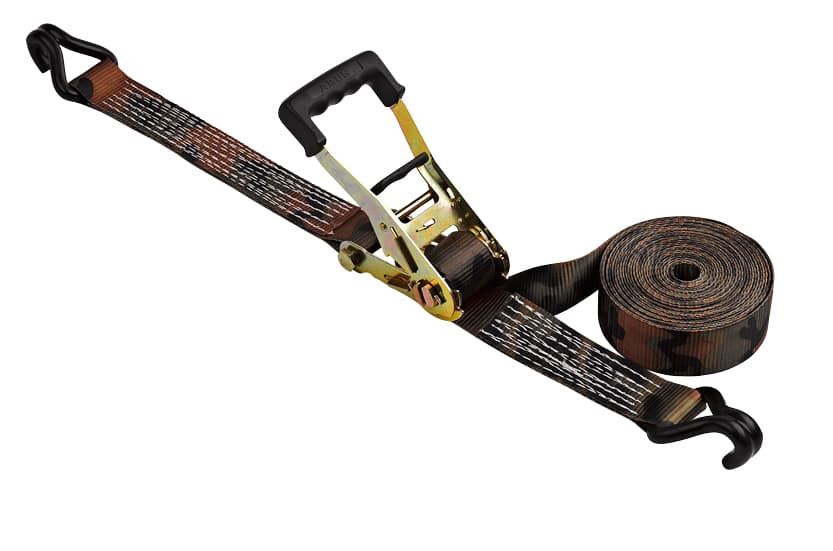
Ratchet straps are the most commonly used tool for securing heavy goods. They utilize a ratchet mechanism to tighten the strap, thus firmly securing the goods in place. The straps are made of high-strength polyester webbing. Hooks or chain extensions connect them to the anchor point. The ratchet handle allows you to crank and tighten the strap, preventing the goods from shifting. Ratchet straps have a breaking strength of 1500 lbs (approximately 680 kg) and a working weight of 500 lbs (approximately 227 kg). The webbing is typically 10 feet (approximately 3 meters) long, making it ideal for securing large items.
Ratchet straps consist of webbing, a ratchet mechanism, and sometimes a cam buckle. The ratchet mechanism allows you to apply greater force, preventing the goods from shifting during movement. Ratchet straps are widely used in trucking, construction, warehousing, and manufacturing industries. The table below lists the main application scenarios for these straps:
| Industry | Description |
|---|---|
| Trucking | Used for securing cargo during transport. |
| Construction | Essential for holding materials in place. |
| Warehousing | Helps in organizing and securing stored goods. |
| Manufacturing | Important for safe transport of products. |
Ratchet straps are available with various end fittings. Wire hooks are suitable for a variety of anchor points. Flat hooks are compatible with E-rail and L-rail systems. Spring hooks provide quick and easy locking. Chain extensions help handle tricky angles.
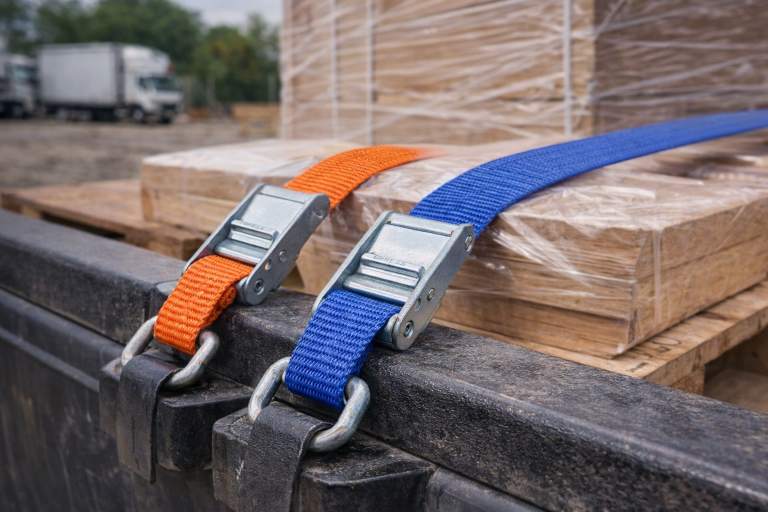
Cam-Lock Straps
Cam-lock straps are suitable for lighter loads and are easy to use. They use a cam instead of a ratchet. Simply press the cam lever, tighten the strap, and release to lock. Cam-lock straps are more convenient and faster than ratchet straps. They are best suited for loads under 750 pounds.
The table below compares cam-lock straps and ratchet straps:
| Feature | Cam Buckle Straps | Ratchet Straps |
|---|---|---|
| Strength | For lighter loads, under 700-750 lbs | For heavier loads, up to 20,000 lbs |
| Usability | Quick and easy to secure cargo | Takes longer to learn |
| Customization | Many colors and lengths available | Fewer options |
| Durability | Good for normal cargo | Best for heavy-duty use |
Cam-buckle lashing straps are more affordable and ideal for items such as kayaks, bicycles, or boxes. Their working load range is 300 to 1000 pounds. These straps help you quickly and securely fasten cargo.
Over Center Buckle Straps
The buckle of a center-buckle lashing strap locks when you push the control lever past the center position. This tightens the strap, firmly securing the cargo. Center-buckle lashing straps maintain cargo stability by converting motion into tension. The locking mechanism reduces cargo shift by half. Truck drivers save time because these straps require fewer adjustments.
The table below lists the main truck lashing straps by width and working load range:
| Strap Width | Typical WLL Range (LBS) | Typical WLL Range (KG) | Usage Level |
|---|---|---|---|
| 1 Inch (1″) | 400 – 1,100 | 180 – 500 | Light Duty (Hobby/Retail) |
| 2 Inches (2″) | 1,500 – 3,333 | 680 – 1,500 | Medium Duty (Standard Commercial) |
| 3 Inches (3″) | ~5,400 | ~2,450 | Heavy Duty |
| 4 Inches (4″) | 5,400 – 6,700+ | 2,450 – 3,000+ | Very Heavy Duty (Industrial) |
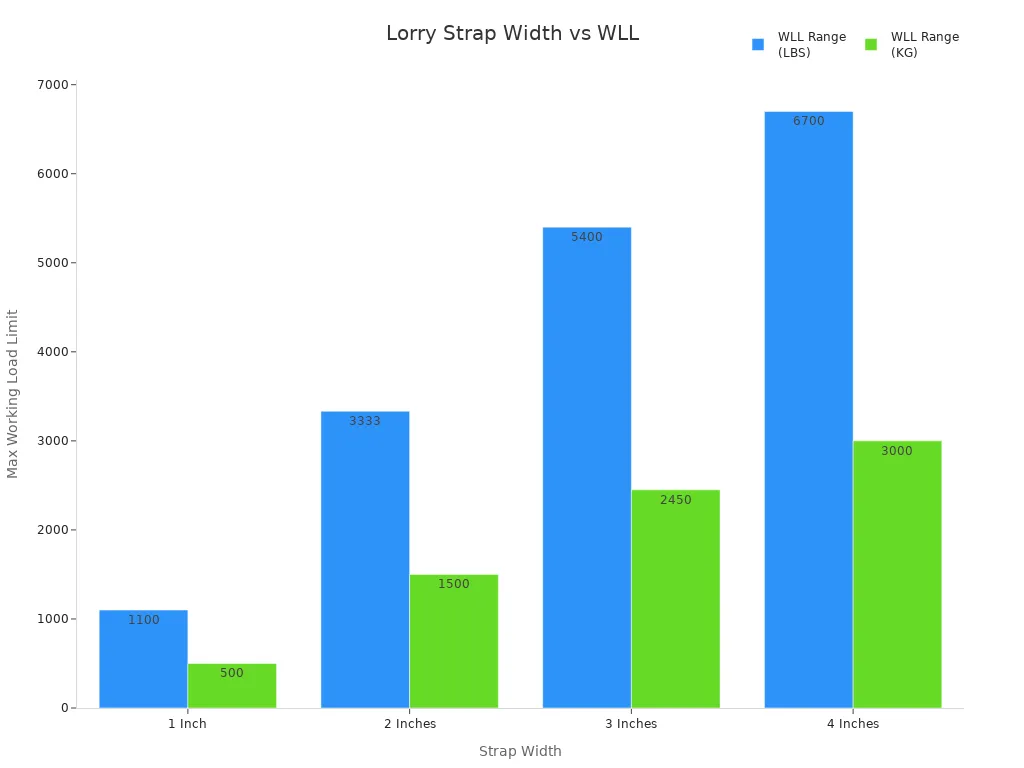
Choosing the right tie-down straps ensures cargo safety and facilitates smooth transportation. The type, width, and end fittings of the tie-down straps all contribute to the protection of cargo during each transport.
Choosing and Identifying Straps
How to Select the Right Strap
Choosing the right tie-down straps helps drivers secure cargo safely. The best truck tie-down straps depend on the type, weight, and transport conditions of the cargo. The table below lists the important criteria for choosing the correct tie-down straps:
| Criteria | Description |
|---|---|
| Working Load Limits (WLL) | The highest weight a strap can safely secure. Always match the WLL to your cargo. |
| Strap Types | Ratchet, cam buckle, and lashing straps each serve different needs and strengths. |
| Material Requirements | Polyester webbing offers strength and durability for most cargo. |
| Installation Techniques | Proper installation ensures the strap can secure the load and meet safety rules. |
Drivers should use ratchet-type straps to secure heavy loads and use cable ties to secure lighter or fragile items. The width of the strap affects its working load limit. Wider straps can secure heavier cargo. When tightening the straps, always check that the tension is appropriate for the cargo. Using the wrong straps or insufficient straps can lead to transportation safety hazards.
Tips for Buying Truck Straps
Buyers should choose certified straps made of strong materials with reliable hardware. Here are some tips to help you identify quality straps and secure your cargo:
- Choose polyester webbing for strength and longevity.
- Choose galvanized hardware to prevent rust.
- Check that the stitching is strong and the hardware is sturdy.
- Only buy straps with certifications such as ISO 9001, CE, or GS.
- Inspect the straps for wear, rust, or stiffness before each use.
- Store the straps in a cool, dry place to prevent damage.
Baoying is a well-known and trusted brand of ratchet ties and binding products. Their products meet stringent standards and are certified by ISO 9001, CE, and GS. Baoying offers a wide range of ties to meet diverse cargo transportation needs, helping drivers secure their goods with peace of mind.
Truck ties have many different names. Some people call them ratchet ties, securing straps, or binding straps. Using the correct name helps both buyer and seller communicate clearly and ensures safe transport. Choosing quality truck ties is crucial for safety and trust.
Reputable brands like Baoying produce tie-down straps that meet high standards. Drivers should use the correct tie-down straps according to different operational needs. Using clear names and high-quality tie-down straps makes every transport safer.
FAQ
What are the main types of truck tie-down straps?
Truck tie-down straps include ratchet tie-down straps, cam buckle tie-down straps, and center buckle tie-down straps. Each type of tie-down strap secures cargo differently. Drivers choose based on cargo weight and transport requirements.
How to check if truck tie-down straps are safe?
Check the tie-down straps for wear, rust, or damaged hardware. Certified tie-down straps will bear ISO 9001, CE, or GS marks. High-quality tie-down straps ensure cargo safety.
Why are polyester webbing used to make truck tie-down straps?
Polyester webbing is light-resistant, moisture-proof, and chemically resistant. It is strong, durable, and not easily stretched. This material protects goods during transportation.
What is the Working Load Limit (WLL) of truck tie-down straps?
The Working Load Limit refers to the maximum weight that the tie-down strap can securely hold. For safe transport, drivers must ensure that the weight of the tie-down strap matches the weight of the cargo.
Which brand of truck tie-down straps is reliable?
BaoYing provides durable tie-down straps. Their products meet stringent standards and are certified. Many drivers trust BaoYing to ensure the safe transport of their goods.