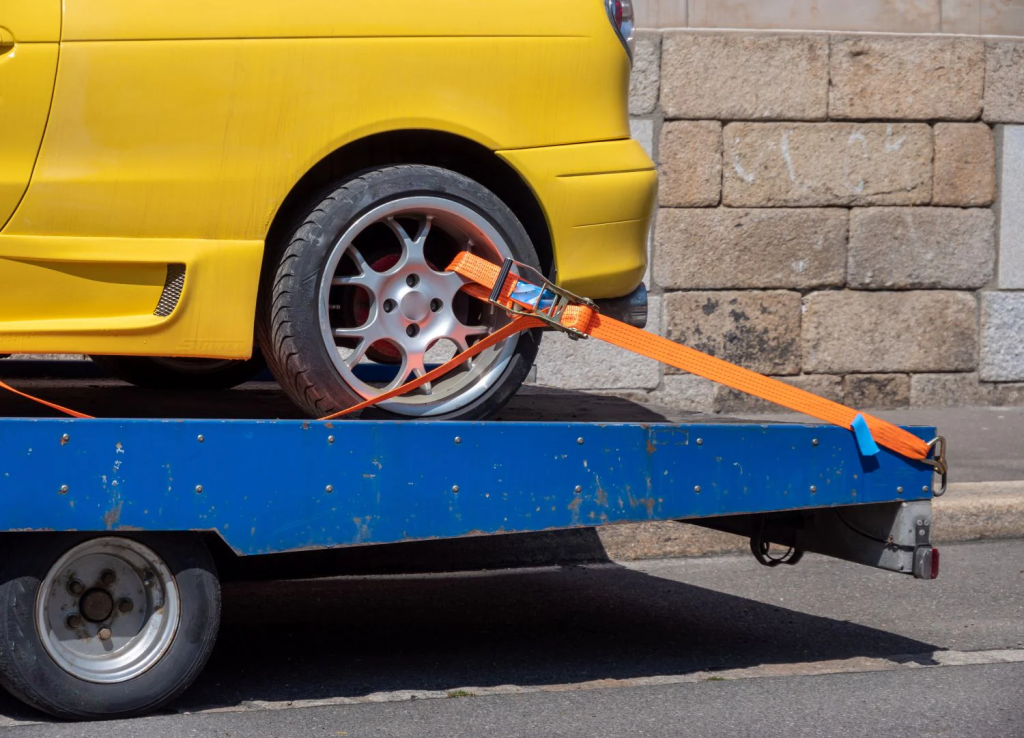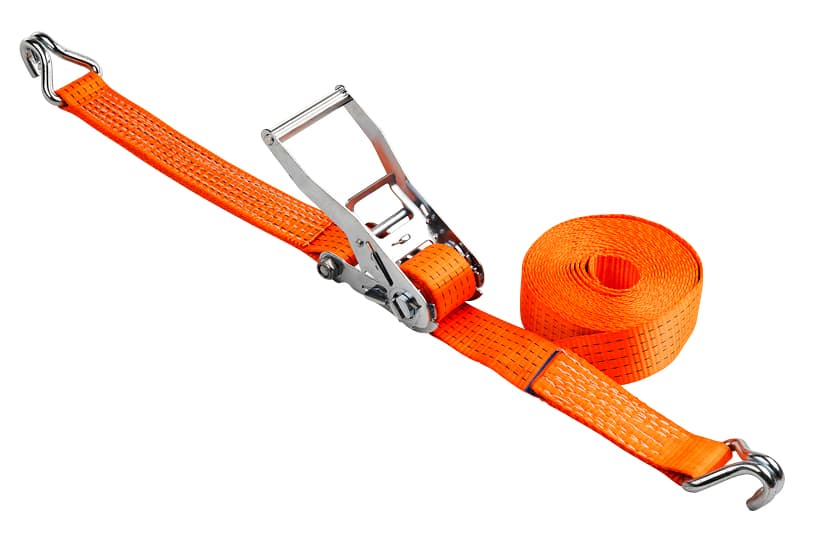
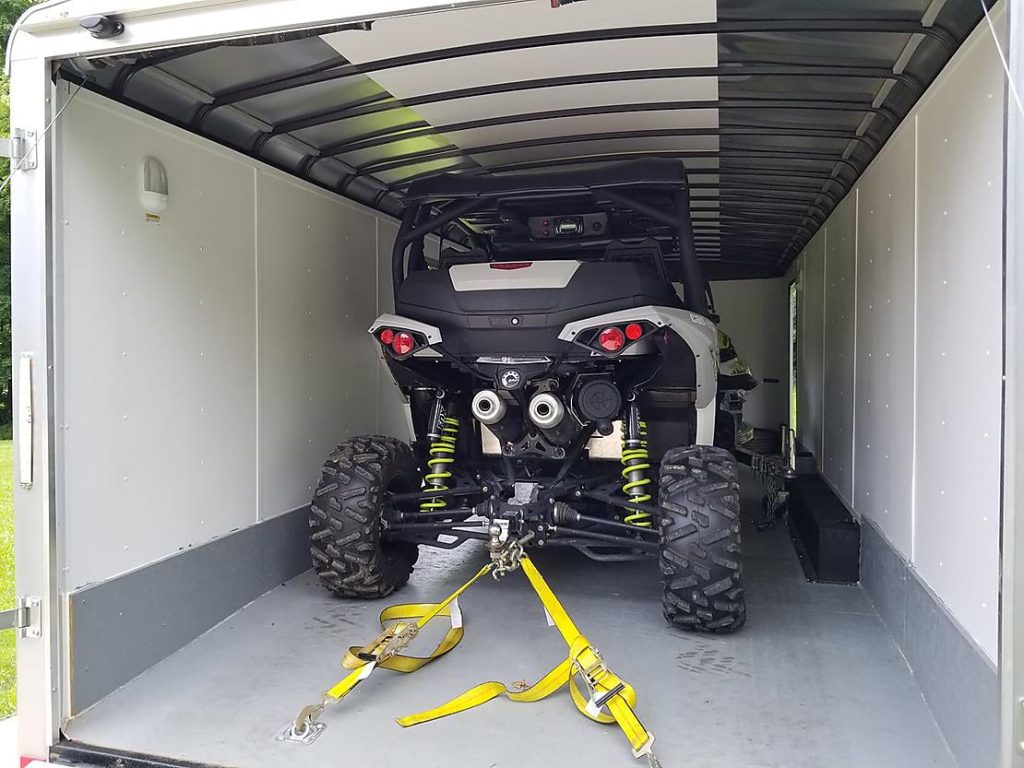
Polyester is the primary fabric of ratchet belts. The choice of fabric is crucial to the effectiveness of ratchet belts in securing goods. This fabric is high in strength, has low elongation, and offers good UV resistance and moisture protection. These properties help ensure the safety of goods during transport.
Key Takeaways
- Polyester is the primary fabric of ratchet belts. Its high strength and low elongation make it ideal for securing heavy loads.
- Polyester webbing can support 3,000 to 5,000 pounds (approximately 1360 to 2270 kg). This ensures the safety and stability of goods during transport.
- Polyester is resistant to UV rays, moisture, and abrasion. This helps extend the life of the ratchet belt and maintain good performance under harsh conditions.
- When selecting ratchet belts, look for certifications such as ISO 9001 or CE. These certifications indicate that the ratchet belt is safe, reliable, and of high quality.
- For heavy-duty operations, use polyester webbing. If shock absorption is required, use nylon webbing. For lighter, lower-cost tasks, use polypropylene webbing.
Ratchet Straps Fabric Overview
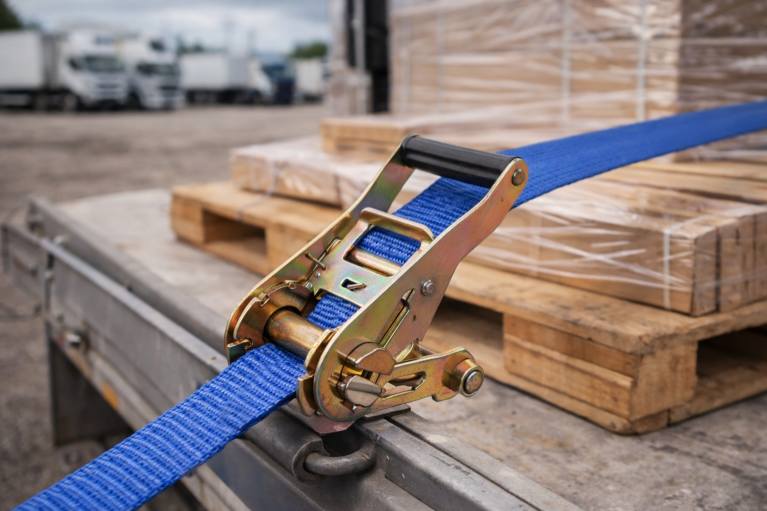
Polyester Webbing
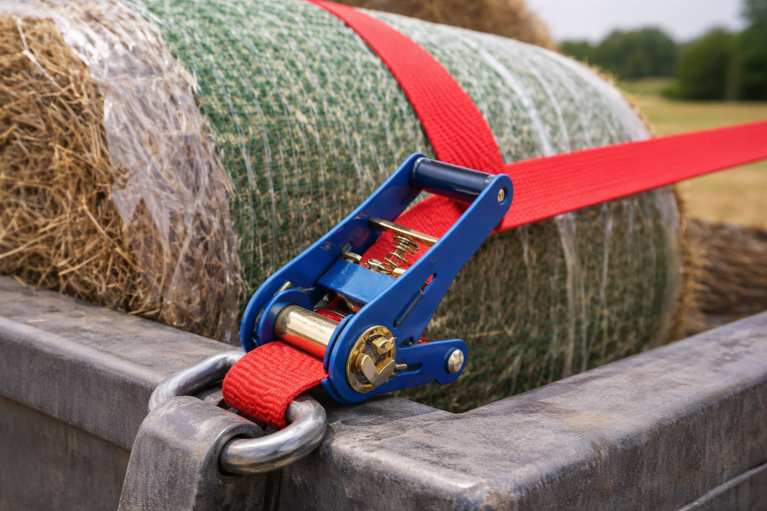
Polyester fiber is the primary material for ratchet binding straps. Polyester is chosen because it is strong, durable, and resistant to stretching and deformation. It also offers good resistance to sunlight and water damage. Companies like Baoying use polyester webbing, making their binding straps secure, reliable, and of superior quality. This fabric can withstand heavy loads and ensures the safety of goods during transport.
The main fabrics used in ratchet straps fabric are:
- Polyester: This is the most common. It is strong, does not stretch much, and can handle tough weather.
- Nylon: You can find this sometimes, but it stretches more. It is not the best for heavy work.
Key Properties of Polyester
Polyester webbing has many good qualities that make it great for tie down straps. These qualities help keep things safe and make the straps last a long time.
| Property | Description |
|---|---|
| Strength | Very strong, can hold heavy things when moving. |
| Durability | Lasts a long time, does not get ruined by sun or water. |
| Environmental Resistance | Stays strong against sunlight, water, and rubbing. |
One-inch-wide polyester webbing typically withstands 3,000 to 5,000 pounds of tensile strength and is used to make ratchet ties. This means it can carry large, heavy loads without breaking or stretching. Polyester is also unaffected by sunlight, mold, or chemicals, making it ideal for outdoor or factory environments.
Profit uses polyester webbing in its ties to ensure superior performance and durability. Their ties meet international standards and securely hold goods, crucial for safe transport.
Advantages of Polyester
High Strength, Low Elongation
Polyester is the preferred material for ratchet ties because of its high strength and low elongation. This helps the ties secure goods firmly, preventing them from shifting during transport. Compared to other materials, polyester offers the following significant advantages:
- Polyester is tough and lasts a long time, so it keeps cargo safe.
- It does not stretch a lot, which helps keep things tight and steady.
- Nylon stretches more, so it is better for recovery straps, not tie-downs.
If you compare how different materials work, you can see why people pick polyester:
| Material | Load Capacity Characteristics | Creep Resistance | Water Absorption Impact |
|---|---|---|---|
| Polyester | Stays strong when pulling for a long time, good for steady jobs | High | Stays strong even when wet |
| Nylon | Very strong when moving, but gets weaker when wet | Moderate | Loses strength when wet |
| Polypropylene | Not very strong, stretches the most, cannot hold heavy loads | Low | Starts out weak and stays weak |
Polyester webbing stretches only about 5-15% under load. This slight stretch prevents goods from shifting and keeps them secure even when damp.
Durability and Weather Resistance
Polyester fibers are unaffected by sunlight, water, or mold. These properties help extend the webbing’s lifespan, allowing it to perform well outdoors or in harsh environments.
- Polyester can handle sunlight, so it does not break down outside.
- It does not soak up much water, less than 0.4% of its weight, so the strap stays the same length and tightness.
- The fabric does not let mold or mildew grow, so it stays strong in wet places.
- Because it is strong and does not soak up water, it does not rot or get moldy.
These things make polyester a good choice for use in shipping, boats, and factories for a long time.
Industry Standards and Certifications
Ratchet straps must meet safety and quality rules in many countries. Polyester straps often have special certifications like:
- GS TUV Certification, which checks if the straps are safe and work well.
- C-TPAT Certification, which makes sure products can cross borders safely.
BAOYING is a company that follows these rules. They use new ways to make straps and check quality to meet ISO 9001, CE, and GS certifications. BAOYING also lets customers ask for special straps, showing they care about safety and doing a good job.
Ratchet Straps Alternative Materials
Nylon Webbing
Nylon is a high-strength material used for webbing. It is flexible and resistant to wear. Many people choose nylon because of its good shock absorption properties. This is very useful when moving or relocating goods, such as in cars or RVs. However, nylon absorbs water, so its strength decreases when wet. Additionally, it is more expensive than other materials.
Polypropylene Webbing
Polypropylene webbing is lightweight and inexpensive. It has poor water absorption and is resistant to chemical corrosion. Polypropylene webbing is commonly used for transporting light goods or when cost savings are needed. It is suitable for light goods, packaging, or short-term use. Polypropylene webbing is not strong enough to withstand heavy loads. Furthermore, it wears more easily under sunlight or friction.
Comparison with Polyester
The table below lists the differences between nylon, polypropylene, and polyester:
| Material | Advantages | Disadvantages |
|---|---|---|
| Polypropylene | Light, cheap, resists chemicals, comes in many colors | Not strong, breaks down in sun, wears out fast |
| Nylon | Very strong, bends easily, does not wear out fast | Takes in water, gets weak when wet, costs more |
| Polyester | Strong, resists sun, stays stable, lasts long | Costs more than polypropylene, not as bendy |
Polyester is the best material for making ratchet straps. It is strong, durable, and does not stretch easily, ensuring the safety of goods. Polypropylene is lighter and cheaper, but its load-bearing capacity is limited. Nylon has good impact resistance, but it is more expensive and weakens when exposed to water.
Fabric Performance & Safety
Load Capacity and Stability
The fabric material of the ratchet strap determines its load-bearing capacity and also helps maintain cargo stability. Polyester webbing is lightweight, strong, and tightly woven, effectively distributing tension to ensure cargo stability. Nylon webbing is inferior to polyester in both strength and flexibility. The table below lists the differences between polyester and nylon webbing:
| Property | Polyester Webbing | Nylon Alternatives |
|---|---|---|
| Strength-to-Weight Ratio | Very high | Not as high |
| Flexibility | Stays flexible | Not as flexible |
| UV Resistance | Great, stays strong in sunlight | Not as good, gets weak in sunlight |
| Weaving Pattern | Tight weave spreads tension | Loose weave can cause stress spots |
Manufacturers test the load-bearing capacity of the straps, measuring the breaking strength of the webbing and ratchet, and setting a safety limit of one-third of the breaking strength of the weakest point to ensure the safety of heavy objects.
Abrasion Resistance and UV Resistance
Polyester webbing has excellent abrasion resistance and sun protection, making it ideal for outdoor and high-intensity work. Three-layered polyester webbing is even stronger and has a longer service life. Polyester is five times more abrasion-resistant than polypropylene, retaining its strength even after hours of sun exposure. Studies show that polyester retains up to 85% of its strength after prolonged sun exposure, while nylon loses more than half its strength, and polypropylene weakens even faster. Polyester absorbs ultraviolet rays and converts them into heat, thus protecting the fibers.
Compliance and Safe Use
Ratchet straps must follow strict safety rules. These rules protect people and cargo. Some important standards are:
- DOT (Department of Transportation): Makes rules for cargo straps used on roads.
- WSTDA (Web Sling & Tie Down Association): Gives guidelines for making and testing straps.
- EN 12195-2: A European rule for web lashings made from synthetic fibers.
BAOYING follows these rules closely. The company checks quality and tests every strap. They meet ISO 9001, CE, and GS certifications. This careful process makes sure each strap is safe and ready for hard jobs.
Polyester is the best fabric for ratchet straps. It is strong and does not stretch much. It also stands up well to bad weather and sunlight. This fabric keeps things safe when they are moved and lasts a long time. When picking ratchet straps, people should check for these things:
- The strap should not stretch much so loads stay steady
- It should be very strong to hold heavy things
- It needs to resist rubbing and sunlight
- It should work well in any weather
Polyester webbing does all of these jobs. That is why it is the main fabric used for safe and strong cargo straps.
FAQ
What fabric is primarily used in ratchet straps?
Manufacturers typically use polyester fiber as the primary fabric for ratchet straps. This material is strong and has low elongation, ensuring goods are securely held during transport.
Why do companies choose polyester fiber over nylon for strap fabric?
Polyester fiber is more sun-resistant and water-resistant than nylon, and its lower elongation helps maintain cargo stability. Therefore, companies prefer polyester fiber for heavy-duty and outdoor applications.
What is the load-bearing capacity of ratchet straps?
A standard 1-inch polyester ratchet strap can support 3,000 to 5,000 pounds. The specific load-bearing capacity depends on the width and construction of the ratchet strap.
What is industrial-grade webbing?
Industrial-grade webbing refers to robust and durable fabrics designed specifically for heavy-duty applications, meeting stringent safety standards. This type of webbing is suitable for commercial and industrial environments.
How can users determine if a ratchet strap is safe?
Users should check for certification marks such as ISO 9001, CE, or GS. They should also check the watch strap for damage before each use.