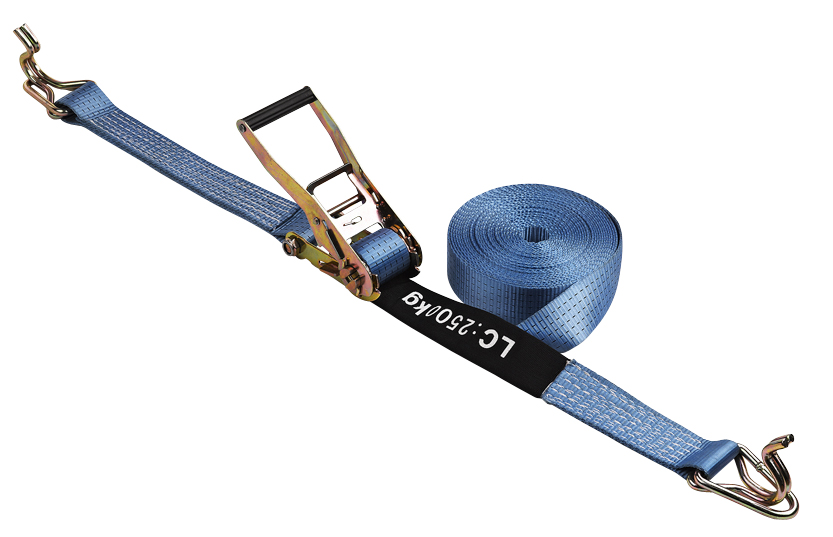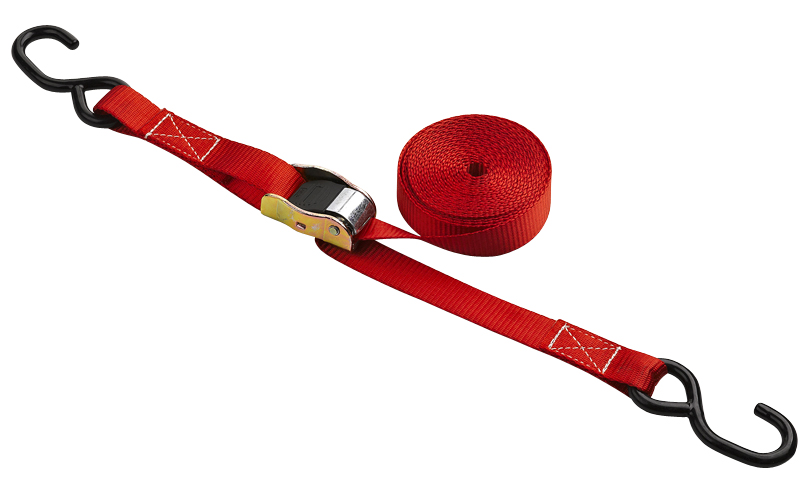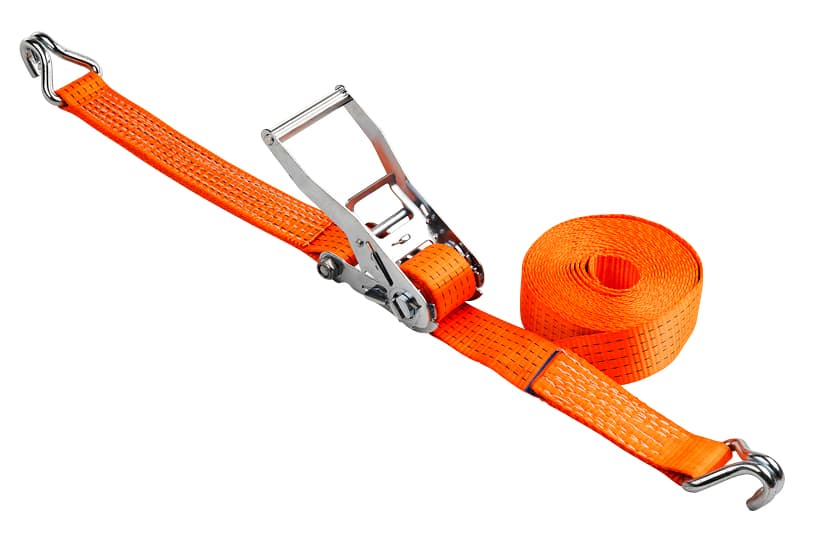
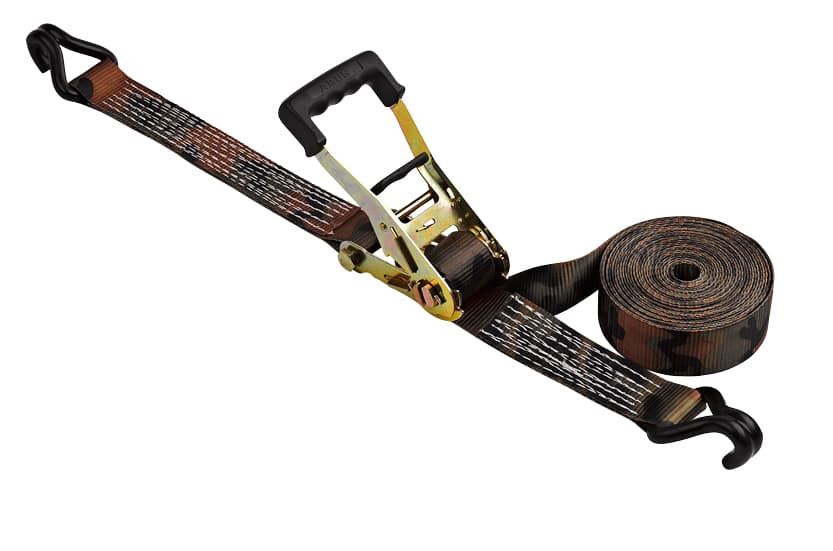
Ratchet straps are sturdy straps with a ratchet mechanism. They securely fasten goods during handling. They are used to prevent goods from shifting or falling, thus avoiding accidents and damage. High-quality ratchet straps are crucial because strong straps ensure the safety of goods and protect both the goods and those around them. Choosing the right equipment reduces the probability of problems and provides peace of mind.
Key Takeaways
- Ratchet straps help keep goods safe during handling. They prevent goods from slipping and causing accidents. Choose the appropriate ratchet strap material and size, ensuring it can withstand the weight and type of goods. Inspect the ratchet strap before each use to ensure your safety and prevent damage or injury to the goods. Always lock the ratchet after tightening to ensure the safety of the goods during handling. Using certified ratchet straps from reputable brands will make handling safer and more reliable.
Ratchet Lashing Basics
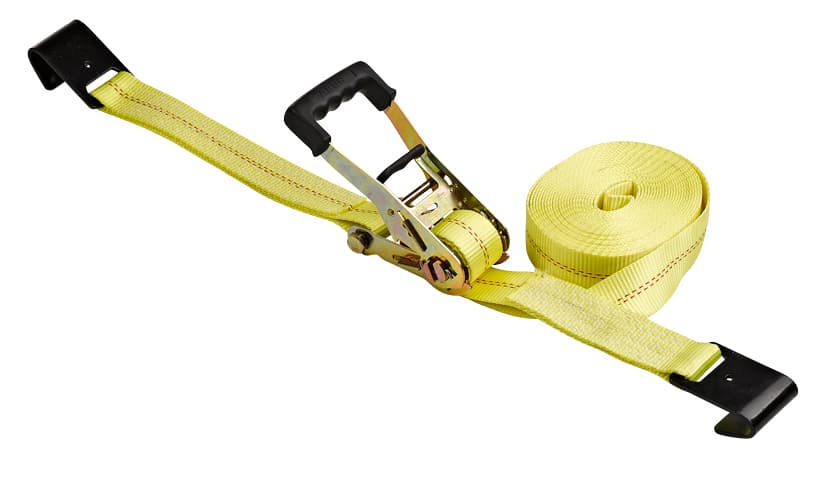
What are Ratchet Straps?
Ratchet straps are a strong securing system used to ensure the safety of goods during transport. They are used on trucks, trailers, and other vehicles. Their primary function is to prevent items from slipping or falling, thus avoiding damage. Ratchet straps have a wide range of applications, playing an important role in moving, construction, and even leisure travel.
- Transportation: Used to secure goods on trucks, trailers, and flatbed trucks.
- Logistics and Warehousing: Prevents goods on pallets from moving or falling.
- Moving and Handling: Protects furniture and appliances during transport.
- Construction and Manufacturing: Used to secure tools and materials on construction sites.
- Leisure Activities: Used to secure boats, motorcycles, and ATVs.
BAOYING manufactures strong ratchet straps suitable for all of the above applications.
Key Components
A ratchet strap system consists of several main components. Each component helps ensure the safe and secure hold of goods.
| Component | Description |
|---|---|
| Webbing Strap | Made from tough materials like polyester, polypropylene, or nylon. |
| Ratchet Mechanism | The metal part that pulls the strap tight and locks it. |
| End Fittings | Hooks or loops that connect the strap to anchor points. |
The material you pick changes how strong the strap is. Here is a table with common materials and their good points:
| Material | Advantages |
|---|---|
| Polyester | Very strong, does not get weak in sunlight |
| Polypropylene | Light and not expensive |
| Nylon | Stretches well and lasts long |
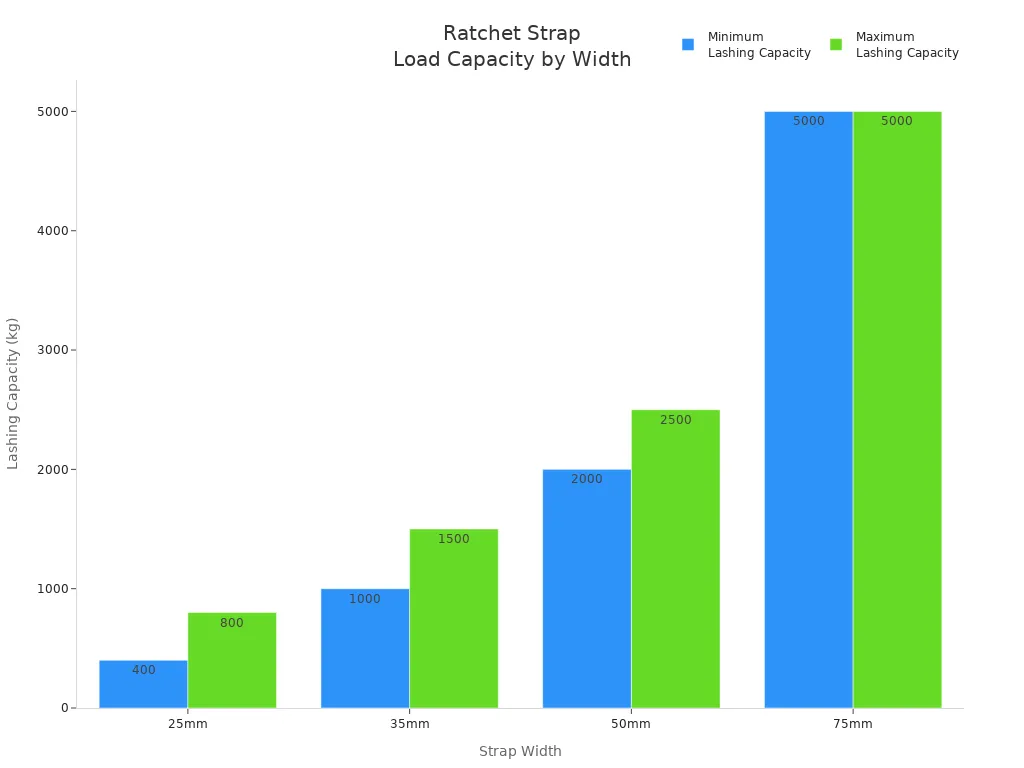
Ratchet straps are available in a variety of sizes and strengths. The optimal size depends on your cargo and its weight. The table below shows the load-bearing capacity of different widths of straps:
| Width | Lashing Capacity (LC) | Typical Application |
|---|---|---|
| 25mm | 400kg – 800kg | Roof racks, camping, kayaks, light DIY |
| 35mm | 1000kg – 1500kg | Utes, box trailers, motorcycles, trade use |
| 50mm | 2000kg – 2500kg | Heavy trucks, logistics, semi-trailers |
| 75mm | 5000kg | Heavy machinery, mining, oversized loads |
How It Works
The ratchet lashing system uses a special component to tighten and lock the lashing strap. This component allows the user to easily tighten the lashing strap.
- First, the user passes the lashing strap through the ratchet mechanism.
- Then, the user turns the ratchet handle back and forth to tighten the lashing strap.
- The gears inside the ratchet lock the lashing strap, preventing it from slipping.
- Even if the vehicle shakes or moves, the locking device ensures the lashing strap remains secure.
Tip: Always ensure the ratchet is locked before starting to drive. This ensures your goods are safe and secure.
Ratchet lashing straps are a safe and reliable way to secure goods, suitable for goods of all sizes. Their design makes tightening and loosening the lashing strap easy and convenient. BAOYING lashing straps are suitable for everyday work and heavy physical labor.
Features and Advantages of Ratchet Ladders
Strength and Durability
Ratchet lashing straps are very strong. They remain taut even when securing heavy objects. BAOYING lashing straps are made of polyester and nylon. These materials are not easily worn or weakened by sunlight. If stored and used properly, the straps can last 2 to 5 years. Most manufacturers recommend replacing the straps every 2 to 4 years for safety reasons.
The table below shows the strength of different straps:
| Tie-Down Solution | Tensile Strength (lbs) | Ideal Use Case |
|---|---|---|
| Ratchet Lashing Straps | Significantly higher | Heavy loads, long-haul transport |
| Cam Buckle Straps | Lower | Lighter loads |
| Bungee Cords | Lower | Light, flexible securing |
Ratchet straps securely fasten goods, preventing them from shifting. The taut straps increase friction, preventing goods from sliding even during sudden stops or sharp turns.
Versatile Uses
Ratchet straps are versatile. They help secure goods in trucks and warehouses. Construction workers use them to secure tools and materials. People also use them when moving furniture or appliances. They are also suitable for leisure travel, such as securing boats or motorcycles.
- Transportation: Prevents goods from shifting or falling.
- Construction: Secures tools and materials.
- Logistics: Ensures the safety of goods on pallets.
- Moving: Protects furniture and appliances.
- Leisure: Secures outdoor equipment and vehicles.
Baoying offers a variety of types of ratchet straps to meet diverse needs.
Safety Advantages
Ratchet straps make everything safer. They are easier to use compared to some other tools. For example, a ratchet strap requires approximately 10 pounds of force. Lever straps require more force. This means a lower risk of injury.
The following table lists the important safety rules for ratchet straps:
| Requirement | Details |
|---|---|
| Working Load Limit Marking | Strap must have a clear, permanent label |
| Material Standards | Polyester or nylon must meet federal rules |
| Hardware Requirements | Ratchets and hooks must meet DOT standards |
| Testing Compliance | Must be tested at 2.5 times the working load limit |
| Safety Factor | Must be three times stronger than the working load limit |
Ratcheted lashing straps must pass rigorous testing. EN12195-2 is a key certification for the shipping industry, especially in Europe. This standard ensures that the lashing straps are safe, reliable, and perform well. Ladders bearing this mark are essential for global trade and insurance.
Safety Usage Guidelines
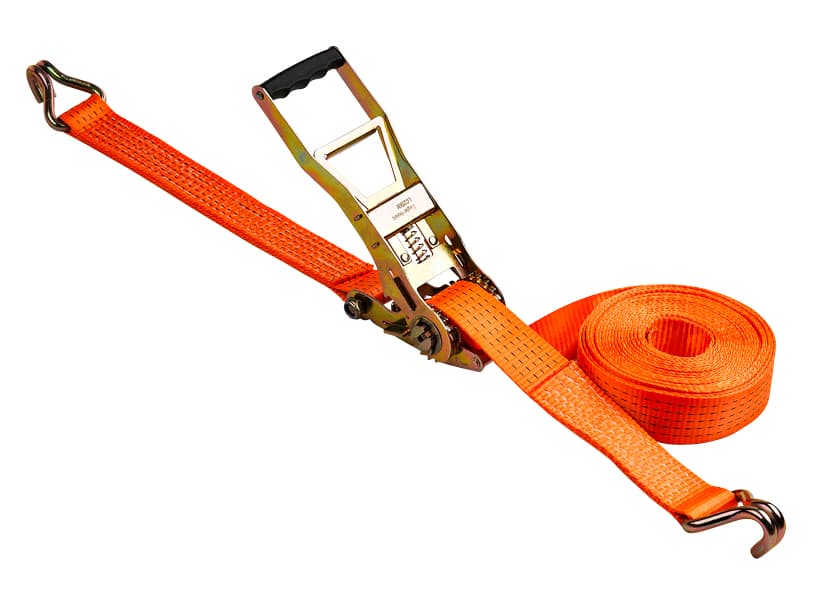
Step-by-Step Instructions
Anyone can safely use ratchet lashing by following these steps:
- Fully open the ratchet handle.
- Thread the end of the webbing through the slot on the ratchet shaft from below.
- Pull the webbing taut, ensuring it is flat and not twisted.
- Attach the hook or end fitting to secure anchor points on both sides of the cargo.
- Turn the ratchet handle up and down to tighten the webbing until it feels firm. Do not overtighten.
- Lock the ratchet handle down until you hear a click. This ensures the webbing is securely held in place during transport.
Tip: For heavier or larger cargo, use multiple webbing strips and distribute them evenly.
Common Mistakes and How to Avoid Them
People sometimes make mistakes when using ratchet lashing. These mistakes can lead to unsafe situations:
- Attaching the hook to a weak or unstable anchor point.
- They twist or entangle the webbing, which weakens the lashing.
- They overtighten the lashing, which can damage the cargo.
- They forget to lock the ratchet handle before moving the vehicle.
- They will use worn or damaged straps.
Note: Always inspect the straps and accessories before each use.
Safety Tips
Following these safety tips helps prevent accidents and ensure the safety of your goods:
- Before each use, check the straps for cuts, abrasions, or broken stitching.
- Ensure the ratchet mechanism operates smoothly.
- Use only certified straps that match the weight of your goods.
- Never stand over the straps while they are tightened.
- After use, store the straps in a dry, cool place.
If someone does not follow these guidelines, goods may shift or fall during transport. This can cause personal injury, damage to goods, or additional costs for replacing damaged straps. Using the correct ratchet binding method ensures the safety of everyone and protects valuable goods.
Choosing the Right Ratchet Straps
Material and Size
Choosing the right material and size depends on your goods. Polyester webbing is strong and durable and does not easily weaken from sun exposure. If you need some elasticity, nylon webbing is a good choice. The width and length of the straps are also important. Wider straps can carry heavier items. Different lengths are suitable for goods of different sizes.
- Common webbing widths: 25mm, 35mm, 50mm, 75mm
- Length options: 4m, 6m, 8m, 10m or custom lengths
- Tear strength: 800kg to 10,000kg, depending on the model
- Hook types: Double J hook, flat hook, S-hook, claw hook
These straps are widely used in logistics, construction, and maritime industries. For example, 1-inch wide straps are suitable for motorcycles and furniture. 2-inch wide straps are suitable for general cargo. Heavy cargo requires 3-inch or 4-inch straps.
| Material | Characteristics |
|---|---|
| Polyester | Strong, UV resistant, does not stretch much, good for heavy loads |
| Nylon | Stretches, strong, good for loads that need some give |
| Webbing | Flat for most loads, round for flexible and heavy items |
| Coatings | Protects against moisture, oil, and chemicals |
Load Rating
The load capacity rating indicates the maximum weight the strap can safely bear. This rating is measured using Standard Tension (STF). STF represents the maximum tensile force the strap can withstand. The working load limit must be greater than the weight of the cargo. Choosing the appropriate length is crucial. If the strap is too short, it won’t cover the cargo; if it’s too long, it will easily tangle. Ratchet mechanisms are best suited for heavy loads, ensuring the strap remains taut and secure at all times.
Customization Options
Every cargo transportation task is different. We offer a variety of options to meet your specific needs. Customers can choose the strap width, length, breaking strength, and binding capacity. Different hook types are suitable for different anchoring points. Color selection and logo printing features help enhance your company’s brand image.
| Customization Aspect | Details |
|---|---|
| Width | Pick from several widths for different cargo types |
| Length | Custom lengths are available |
| Breaking Strength | Choose the right strength for safety |
| Lashing Capacity | Made for specific needs |
| Hook Types | Options for different anchor points |
| Color Options | Match company colors or preferences |
Baoying offers comprehensive OEM and ODM services. They can produce straps in special colors, print logos, and customize components. This helps businesses obtain precise ratchet lashing solutions that meet their cargo and transportation needs.
Ratchet lashing ensures cargo security and prevents accidents. Users should always use certified straps, check them for damage, and choose the appropriate size and material based on specific circumstances.
- Use only straps with labels and certifications.
- Regularly check the straps for wear.
- Choose the appropriate straps based on the cargo.
- Use at least two straps to securely fasten the cargo.
Choosing certified products from trusted brands like Baoying helps ensure the safety of cargo and people.
FAQ
What are the main uses of ratchet lashing?
Ratchet lashing is used to secure cargo. They prevent cargo from moving or falling, thus avoiding accidents and protecting the goods.
How often should ratchet straps be inspected?
Experts recommend inspecting the straps after each use. Check for cuts, abrasions, or damage. If any damage is found, replace the straps immediately.
Can ratchet straps get wet?
Most ratchet straps can be used in humid environments. Polyester and nylon straps are not very absorbent. Always dry the straps thoroughly before storing to prevent mold growth.
What certifications should high-quality ratchet straps have?
| Certification | Purpose |
|---|---|
| ISO 9001 | Quality management |
| CE | European safety standard |
| GS | German safety mark |